Renewable Fuel Supply Inventory
Tuesday
May 21, 2013
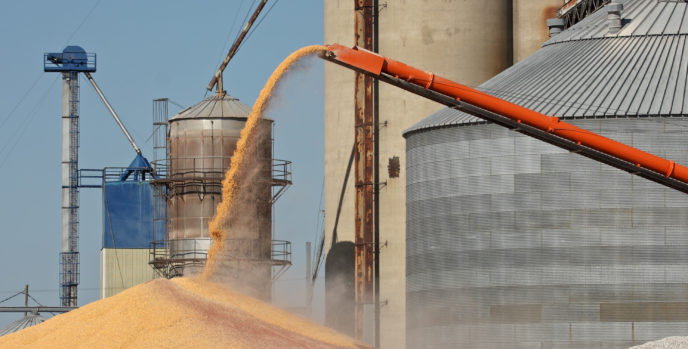
Did you buy enough bulk corn to make it through the winter?
Did you buy too many bags of wood pellets?
With winter gone and warm weather arriving soon, this is the perfect time to take inventory of how much fuel you needed this winter. While you “think” you’ll remember each fall, it’s likely you will be wishing you wrote it down. Taking inventory of how much corn or wood pellets you purchased each winter helps you calculate more accurately the next season and not purchase more than you need. Keeping record of your fuel quantity and fuel prices is also a great way to calculate your fuel savings. For some people who have been doing this for quite some time, the numbers can be astounding.
Whether you buy corn in bulk, a pallet of wood pellets, or switch it up each month all winter long, find a system that works for you to make notes of how much fuel you purchased and how long it lasted. Put it in a place you’re likely to find it next fall when the weather turns cold again. Keeping excess fuel isn’t recommended, and here’s an article that explores why.
Grants for Renewable Energy in Rural Areas Available Now
Tuesday
Apr 23, 2013
The United States Department of Agriculture announced their (REAP) Rural Energy for America Program grant application deadline has been extended. Up to 25% of eligible costs associated with a renewable energy project are available to qualifying applicants. This grant money is made available to rural farms and businesses looking to increase energy efficiencies or implement a related renewable energy project.
Since corn and wood pellet appliances are specifically listed in the information provided for the Rural Energy for America Program grant, we wanted to help spread the word to those who can apply before the deadline. The deadline has been extended to May 31, 2013. If you feel you may qualify, it is recommended that you apply right away. “An applicant’s renewable energy project cannot have purchased equipment or started construction before the grant application is received by the USDA. However, once USDA receipt is confirmed, a project may begin construction,” according to Clean Energy Resource Teams website.
You can find specific details about this grant and the necessary application forms here, on the USDA Rural Development website. Here is a specific .pdf of information mentioning corn/pellet burning appliances and a list of contacts in case you have questions during your application process.
Heating Your Nursery, Greenhouse or Garden Center
Wednesday
Mar 27, 2013
Greenhouses and nurseries have unique needs when it comes to controlling temperatures and heating vast spaces during less than ideal weather. Consistency is important, as are choices and control. When you mix in the need for finding environmentally friendly options that save money, your selection automatically reduces. That’s why greenhouses, nurseries, and garden centers around the United States are taking a closer look at using renewable energy for heat and turning to the solutions provided by American Energy Systems.
Our team recognizes the importance of protecting your plant investments, while reducing overhead. In colder climates, the demand for plants, trees, vegetables, flowers, and fruits doesn’t diminish just because the weather turns cold. The heat bill just gets higher, right? But it doesn’t have to. We want you to find the competitive advantage for your business. Call now to speak with our heating specialists who have helped other nurseries, garden centers, and greenhouses find a renewable energy solution that is cheaper and more effective (1-800-495-3196) and read through this helpful resource designed for greenhouses.
Get Ready to Garden
Saturday
Mar 23, 2013
If you have a pellet stove or fireplace, then you’ve got some nice gardening products readily available come spring. The ash byproducts from your stove can be emptied right to your garden plot all winter long, or can be moved from their temporary spot to your flower or vegetable garden when the ground thaws. Clinkers (the solid ash you find in your fire pot) result from burning corn. Both clinkers and the ash from burning wood pellets make great organic fertilizer.
In addition to having readily available garden fertilizer to get your garden going naturally, here are some other organic gardening tips we’ve pulled together for you:
- Plant a variety of herbs and flowers that naturally repel various pests from your garden. It can be as simple as planting things like marigolds, dill, and basil close to specific other plants. There seems to be an bit of an art to it though, as placement makes all the difference. For a nice tutorial on deterring garden pests by planting specific items, visit Wellness Mama who has an excellent, detailed article on this.
- A series of sprays can be made to spray on leaves of plants using things like onions, garlic, and cayenne pepper. For some easy recipes and instructions, visit Organic Gardening.
- Another common recommendation is building a raised garden bed, bringing the growing area up off the ground. BLEND: Better Living and Exercise Daily shared a story of building these types of beds, along with pictures so you can visualize how you might take advantage of this option to help control pests and weeds.
Do you have a good organic gardening tip you’d like to share? Maybe you have a resource that is very helpful that you can recommend to someone starting their first garden. Share your comments below and post your pictures to our Facebook fan page, Heating Your Home with Alternative Energy.
Wet Wood is a Waste of Money and Fuel
Thursday
Feb 21, 2013
Did you know that properly dried wood should have a reading of 20% or less? If you have a wood burning stove or fireplace, you should invest in a moisture meter. It’s a minor investment that can save you in wasted fuel, money, time and effort. After all, if you spend time or money chopping, hauling, stacking, and storing firewood, you want it to be the best fuel possible. The US Environmental Protection Agency recently published a video entitled “Wet Wood is a Waste” to help you properly use a moisture meter and get the most out of your investment.
The burning of wet wood is also a health and environmental hazard that is avoidable. Learn more about proper drying of wood:
Burning Dry Wood is Better for the Environment and Your Wallet
Friday
Feb 15, 2013
Quality fuel is important. American Energy Systems has written numerous articles about more efficient heat, posted videos about selecting quality fuel, and continues to advise consumers to make good fuel decisions. This includes burning quality, dry wood in your stove or fireplace. Just because you’ve opted to burn wood, doesn’t mean that anything goes. In fact, dry firewood is better for the environment and burns more efficiently.
But, how do you make sure the firewood is dry? The EPA (US Environmental Protection Agency) recently published a public service announcement to help consumers understand the importance of dry firewood. The “Split, Stack, Cover, Store: Four Simple Steps to Drying Firewood” video goes over four simple steps to drying your firewood.
More Ways to Save on Heat
Sunday
Feb 10, 2013
If you are looking for more ways to save on heat, then you’ll want to take advantage of all these ways to save today.
First, the tax credit for qualifying renewable energy appliances has been reinstated for 2013. You can find out all the details of this additional savings here.
Next, Magnum Countryside and Country Flame heating appliances are high efficient heat sources, utilizing the latest technology to get the most out of each of your dollars. When you heat with renewable energy and have multiple choices, the savings is quite astounding. You can calculate your savings here.
And, American Energy Systems offers half off of shipping, so you can save even more money. We also provide a free guide that will help you make the most economical choice in appliance, as well as a decision on what is right for YOU! You can request your free guide now and get on our mailing list for other Great Discounts.
Bottom Line Savings on Heat
Saturday
Jan 19, 2013
People who have made the switch to a renewable heating appliance have found the benefits astounding. In many cases the bottom line cost savings with wood pellets, corn, or other renewable fuel sources dramatically reduces homeowner energy costs.
“The real bonus of this whole story is the (pellet) stove has saved us so much in propane. We just checked our gauge and we have only used 10% of our fuel since the 1st of November.” Carol C.
Whether you live in town with city utilities or in the country with your own propane tank, heating costs account for a large percentage of your monthly bills and personal household budget. We’d all agree that leaving the front door wide open in January isn’t good for your heat bill, yet many old, traditional forms of heating simply aren’t good ideas either anymore. Renewable heat is much more cost effective, and it continues to become more mainstream.
“Our LP furnace in the past would kick on in the early morning, but with this new stove we found the furnace does not come on which is really nice.” Roger B.
With winter heating bills under control people are able to save more money. Now that the 2012 and 2013 tax credits for biomass stoves have been extended, people can save even more! We hear from people every day who are happy to have hundreds of extra dollars each month for living expenses, vacations, or to simply put into savings.
“Thanks for keeping more of our money out of the oil companies hands; they have got enough!” Del C.
Interact with other biomass stove owners on our Facebook page. Do you have a topic you’d like to see covered on our blog? Leave us a comment!
25C Tax Credit Reinstated: Biomass Stove Tax Credit
Wednesday
Jan 9, 2013
On January 2, 2013, President Obama signed the American Taxpayer Relief Act of 2012 (H.R.8) which extended the 2010/2011 tax credit for 2012/2013
$300 Biomass Stove Tax Credit Reinstated for 2012 – 2013
A federal tax credit on 75 percent efficient biomass heating appliances, which expired on December 31, 2011, was reinstated by the “fiscal cliff” legislation, the American Taxpayer Relief Act of 2012 (H.R. 8), signed by President Obama on January 2, 2013. The bill includes a “tax extender” for Internal Revenue Service Section 25C which provides a tax credit for, among many other things, qualifying biomass burning stoves. The extender provides a 10 percent tax credit of up to $300 on a qualifying biomass heating appliance purchased between January 1, 2012 and December 31, 2013. The credit claimable on the purchase or installation of qualifying biomass units is limited to a “lifetime limit” of $500 (and may be impacted by the purchase or installation of other products that qualify of a 25C credit).
You will need to maintain a copy of the Manufacturer’s Certificate which can be downloaded from our website
“PLEASE CONSULT YOUR TAX ADVISER FOR DETAILS OF HOW THIS WILL EFFECT YOU”
History and Background on the Biomass Stove Tax Credit
2008 – At the end of 2008, in the last days of the 110th Congress, HPBA succeeded in having inserted, in a major financial bailout measure, language that provided a 10% tax credit (up to $300) for consumers who purchased a 75% efficient stove “which uses the burning of biomass fuel to heat a dwelling unit…or to heat hot water for use in such a dwelling unit.” A definition of biomass fuel was also included in the language of the bill.
The concept of using the lower heating value (LHV) method, and not the higher heating value (HHV) method, to measure efficiency was not mentioned in the final language of that legislation (H.R. 1424 – Public Law No. 110-343). After passage, a determination was made that without language indicating whether to use HHV or LHV, there would be major confusion among manufacturers about which method (and therefore which efficiency number) to use. Such manufacturer confusion would translate into marketplace (i.e., consumer) confusion.
Following enactment of the 10% tax credit measure, discussions began within HPBA on the fact that using the HHV method (vs. LHV) to determine efficiency would severely reduce the number of units that would qualify for the tax credit.
An effort was immediately begun to get enacted language to specifically list LHV as the efficiency measuring method.
2009 – In early 2009, the new Obama Administration and the new 111th Congress proposed the massive stimulus package, The American Recovery and Reinvestment Act (ARRA) of 2009. Working with our allies in the Congress, HPBA was able to get language inserted into the ARRA draft language that expanded the 2008-passed tax credit to become a 2-year credit with the same requirements (75% efficiency), but with a much-increased value for the tax credit (30%, up to $1500). Lastly, and very importantly, HPBA was able to get language inserted that requires the use of “a thermal efficiency rating of at least 75 % as measured using a lower heating value.” The LHV language was key to ensuring that the biomass-burning stove tax credit would be a success.
2010/2011 – The Tax Relief, Unemployment Insurance Reauthorization, and Job Creation Act TRUIRJCA of 2010, passed at the end of 2010, took the numbers of the biomass-burning stove tax credit back to its pre-2009 levels:
- Tax credit of 10% of purchase price (not to include installation), up to a maximum credit of $300
- Applicable for purchases in 2011 only
- Kept the 75% efficiency level because it referenced the prior credit and did not explicitly (or implicitly) remove the 75% number
- Explicitly removed the Low Heating Value (LHV) testing methodology from TRUIRJCA at Sec. 710(b)(2)(B) but did not mention any substitute method.
In the weeks leading up to Congress’ vote on the tax package, HPBA reached out to congressional leaders to remind them of the importance of this tax credit not only to the hearth industry but to consumers interested in purchasing biomass heating systems. HPBA had been working closely with Senator Susan Collins (R-ME) to ensure that biomass tax credit language was contained in the bill, and we are appreciative of the efforts she put forth in achieving its inclusion. Of particular note is Sen. Collins’ inclusion of language in the Congressional Record (the official transcript of the United States Congress) that directs the IRS to continue to use the lower heating value as the operative efficiency methodology in determining which appliance qualifies for the tax credit. A portion of her remarks stated:
“The IRS has issued guidance directing that the ‘lower heating value’ methodology should be used, which is consistent with industry practices and with our intent to ensure that the credit is available for efficient and clean-burning wood and wood-pellet stoves. Removing the reference to the ‘lower heating value’ from the Code serves little purpose. Certainly, however, it does not mean that this common-sense methodology is precluded, nor does it require the IRS to revisit its methodology. I hope that my comments today will help avoid confusion about the use of the ‘lower heating value’ methodology with respect to this tax credit.”
(Congressional Record, December 15, 2010; Statement by Senator Susan M. Collins; H.R. 4853, Middle Class Tax Relief Act of 2010)
Comments placed in the Congressional Record have no authority to direct or alter regulations or legislation, but they do have the power to suggest how bureaucrats might want to interpret congressional actions. With this in mind, and without any absolute indication to the contrary, HPBA is continuing to suggest that the 75% efficiency level still applies. And, although the very important LHV measurement language has been deleted, we believe (but do not yet know for certain) that the IRS will continue to follow the precedent set by the prior tax credit and allow the use of the LHV measurement to determine efficiency. We are in the process of asking the committees of jurisdiction in the new 112th Congress for a more detailed explanation of why LHV was removed from the tax code, and what we can do to get it permanently returned to the code.
2012/2013 – On January 2, 2013, President Obama signed the American Taxpayer Relief Act of 2012 (H.R.8) which extended the 2010/2011 tax credit for 2012/2013
Lifetime Limitation – The tax code is famous for its “lifetime limitation” language and this tax credit is no different. As with historical tax credits available to the industry, rather than attempting to explain the complicated details of lifetime limitations, HPBA prefers to say, “PLEASE CONSULT YOUR TAX ADVISOR FOR DETAILS OF HOW THIS WILL AFFECT YOU” in all of our comments, both written and oral, about this credit.
Tax Credit FAQs
What is the Biomass-Burning Stove Tax Credit?
This federal tax credit encourages people to make energy-conscious purchases that improve the energy efficiency of their home. It is an up to $300 credit you can get for buying a qualifying biomass-burning stove or fireplace insert between January 1, 2012 and December 31, 2013. Biomass simply means the stove uses wood or pellet fuel.
Consumers claim the credit on their federal income tax form at the end of the year. This new credit reduces the amount of tax you owe. The new credit is a reduction of total income tax at the bottom of your return, up to $1500. This tax credit is a non-refundable tax credit available for individuals who pay taxes and who make energy-conscious purchases to improve the energy efficiency of their home.
Note: With regard to tax credits vs. tax deductions, in general, a tax credit is more valuable than a similar tax deduction. A tax credit reduces the tax you pay, dollar-for-dollar. Tax deductions – such as those for home mortgages and charitable giving – lower your taxable income.
What is the difference between a tax deduction and a tax credit?
As previously stated, a deduction is an expense or amount you can subtract from your taxable income. A tax credit lowers your actual tax bill dollar-for-dollar, in this case by up to $1,500. In general, a tax credit is more valuable than a similar tax deduction.
What is the difference between a non-refundable tax credit and refundable tax credit?
A non-refundable tax credit (such as this one) is a tax credit that is applied to the amount of tax owed by the taxpayer after all deductions are made from his or her taxable income. Typically, a tax credit only reduces an individual’s tax liability to zero. Refundable credits can be considered the same as a payment, with no limit to the amount a taxpayer can receive. A refundable tax credit is a tax credit that is not limited by the amount of an individual’s tax liability.
When does this tax credit go into effect and how long will it last?
The tax credit went into effect January 1, 2009 and is valid only for the purchase of a qualifying biomass stove during 2009 and 2010. The maximum tax credit for the two-year period is $1500. The sales receipt must indicate that the purchase was made between January 1, 2009 and December 31, 2010.
How is the value of this tax credit determined?
When you buy a qualifying biomass-burning appliance between January 1, 2009 and December 31, 2010, you get a tax credit of 30% of the total price, up to $1,500 dollars. So, for example, if your wood or pellet stove cost $5,000 (which can include installation), you can deduct $1,500 from the taxes you owe the government.
What appliances qualify for the tax credit?
Any wood- or pellet-burning stove that meets the 75% efficiency rating qualifies for this credit.
Manufacturers test their products to certify they meet this efficiency standard and the IRS-required certification will come with the product straight from the appliance manufacturer. who can explain which products they have will qualify for the tax credit.
Why was 75% efficiency selected?
The 75% efficiency was designated by the U.S. Congress in 2005 as part of the Energy Policy Act and was used again for this tax credit.Are biomass stoves installed in new or vacation homes covered by this tax credit?
How is the 75% efficiency requirement determined?
The manufacturer of the stove must provide certification that the product tests for at least a 75% efficiency rating using the lower heating value, i.e., the heat value of a combustion process assuming that none of the water vapor resulting from the process is condensed out, so that its latent heat is not available.
Are biomass stoves installed in new or vacation homes covered by this tax credit?
No. The credit only applies to your existing principal residence. New homes and vacation homes don’t qualify, nor do homes owned as rental units. The IRS is very clear that this credit applies only to existing principal residences, thus new homes and vacation homes would not qualify, nor would homes owned as rental units.
What is meant by “renewable biomass?”
For the purposes of this tax credit, the term ‘renewable biomass’ means any of the following:
(A) Materials, pre-commercial thinnings, or removed invasive species from National Forest System land and public lands, including those that are byproducts of preventive treatments (such as trees, wood, brush, thinnings, chips, and slash), that are removed as part of a federally recognized timber sale, or that are removed to reduce hazardous fuels, to reduce or contain disease or insect infestation, or to restore ecosystem health, and that are harvested in environmentally sustainable quantities, as determined by the appropriate federal land manager; and harvested in accordance with federal and state law, and applicable land management plans.
(B) Any organic matter that is available on a renewable or recurring basis from non-federal land or land belonging to an Indian or Indian Tribe that is held in trust by the United States, including renewable plant material like feed grains; other agricultural commodities; other plants and trees; and algae; and waste material, including crop residue; other vegetative waste material (including wood waste and wood residues); animal waste and byproducts (including fats, oils, greases, and manure); construction waste; and food waste and yard waste.
(C) Residues and byproducts from wood, pulp, or paper products facilities.
What is the definition of a “Wood Burning Furnace?”
A wood burning furnace is a simply a furnace type that uses wood as its primary fuel source. In some cases, a wood furnace can simply use radiant heat in order to control environmental conditions in the home, or it can be a forced-air furnace. Forced-air furnaces force air into the furnace, heat it up, and then force the heated air into the ducts for distribution throughout the home. This is also known as central heating.
Will other wood and solid-fuel appliances (like inserts, EPA-certified wood-burning fireplaces and hydronic heaters) qualify for the tax credit?
The IRS did not state that inserts are covered, or are not covered. However, based on EPA’s practice of treating inserts and freestanding biomass stoves in a similar fashion, manufacturers may choose to include inserts. At this time (June 2009) it is not clear whether EPA-certified wood-burning fireplaces or hydronic heaters will qualify.
How do I ensure that I can collect on my tax credit?
Save your receipt that proves you purchased the qualifying appliance between January 1, 2009 and December 31, 2010. You’ll also need a manufacturer’s certification statement that states your product meets the 75% efficiency rating needed to qualify for this tax credit.
A manufacturer’s certification statement must contain the following information:
These documents don’t need to be attached to your tax return, but you should keep them for your records. Click here to download the MagnuM or Country Flame certificate.
What should a retailer provide and the customer retain for tax purposes?
Retailers and consumers must keep exact records of any sale or purchase. Retailers should provide a consumer with the manufacturer’s certification statement for the specific product model purchased. A consumer may rely on a manufacturer’s certification statement that their products are qualified energy property. A taxpayer is not required to attach the certification statement to the return on which the credit is claimed. A consumer claiming a credit for qualified energy property should retain the certification statement as part of the taxpayer’s records. Manufacturers should make this certification document available to consumers on the web, in the product packaging, or in some other easily accessible manner.
Are installation costs included in this tax credit?
Yes. Installation costs are included as long as professional installation is required for the proper and safe operation of the stove. The IRS is silent on the possible need to replace a chimney when upgrading an existing biomass stove; however, the EPA has a section on its website titled, Installation Effects Efficiency, which retailers and consumers should consult when deciding if a chimney replacement is warranted when installing a biomass stove.
Does the stove need to be manufactured in the U.S. to qualify for the credit?
No. There is no “Buy America” component to this tax credit.
Where can I find more information about this tax credit?
You can check out the IRS’s description.
Hearth Patio & Barbecue Association
Still have questions or want to talk to use about purchasing a qualifying unit right away? Call us at American Energy Systems at 1-800-495-3196. We are currently offering to pick up half the cost of shipping to help save you even more money!
Simple Ways to Live More Green
Thursday
Jan 3, 2013
Living green means something different to different people. Some people are making significant changes in their lives, while others are slowly taking steps to reduce their carbon footprint (and learning what that means). However, living more green does not need to be difficult. There are things individuals and families can do, while helping kids learn how to pitch-in and help. You can make smart choices every day and make your imprint on the planet lighter and more green.
Here are some simple ways to live more green:
- Turn down the heat or air conditioning when you leave, the house can be a bit less comfortable and use less energy.
- Learn more about green furnaces and heating sources that use renewable energy.
- Wash your clothes in cold water if possible. The cost of heating water for warm and hot loads uses the most energy.
- Use filtered tap water in a re-usable container instead of bottled water. The plastic water bottles you buy are a major source of waste, plus take lots of resources to manufacture.
- Recycle your electronics. When you get the latest gadget at Christmas or on your birthday, do not put it in the trash. Sell it, donate it, or give it to someone else. Places like Best Buy take old electronics.
- Use reusable bags when shopping. Most of these bags come from recycled materials. Also, you will not be using paper or plastic bags that take plenty of resources to make.
- Keep your faucets and toilets in good repair. A slow drip can waste hundreds of gallons a year.
- Keep unused areas of the house closed off. There is no need to heat or cool unused space such as the attic, a three season porch, or storage space.
- Pay your bills online and lower the amount of paper waste you get each year by half. Some places are offering electronic receipts too.
- Buy in bulk when possible. Buy the largest containers that you can use without wasting contents. This will reduce the amount of packaging your purchases have while preventing you from wasting the product. Many grocery stores, bulk cooperatives, and farmers markets even encourage you to bring your own reusable containers.
- Shop local when possible. Foods, fuel, and other items that don’t have to travel long distances can save on the environment.
What are some additional simple tips for people to live a little bit more green? What small steps did you take at first?